Main Content

What’s New
 Appellate Advocacy Award Winner
Congratulations to Mark Sigmon for receiving the 2026 Award for his outstanding work in Lytle v. Nutramax Laboratories, Inc.
 RSVP for Chicago Fellows Reception
Join NCJI trustees and Fellows as we celebrate the year’s accomplishments. Judges, academics, law students, and attorneys interested in our work are welcome.
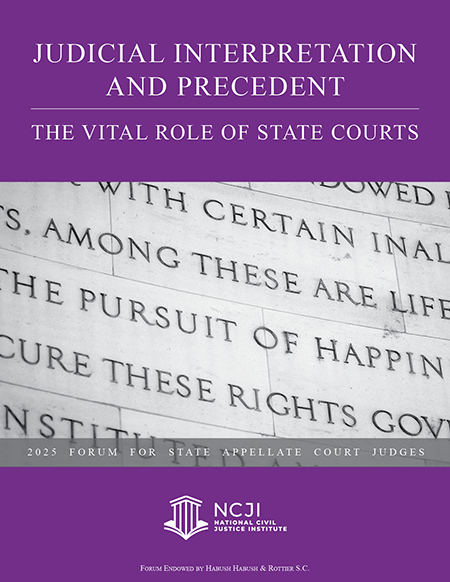 Report on the 2025 Judges Forum is released!
“Judicial Interpretation and Precedent: The Vital Role of State Courts” is available to attorneys, academics, judges, and courts.

2026 Judges Forum NCJI’s 34th annual Forum will take place on July 25, 2026 in Chicago. The topic will be “The Future of Judicial Independence.” State appellate judges may register their interest in attending.
Who We Are
The National Civil Justice Institute is a national legal nonprofit that offers an informed, balanced view of issues affecting the U.S. civil justice system. Whether you’re a lawyer, judge, or legal educator, the Institute offers activities and a highly regarded Judges Forum dedicated to ensuring access to civil justice for all citizens. We are a non-profit organization that is sustained by member dues, charitable donations, and grants.
 Leadership
 NCJI Fellows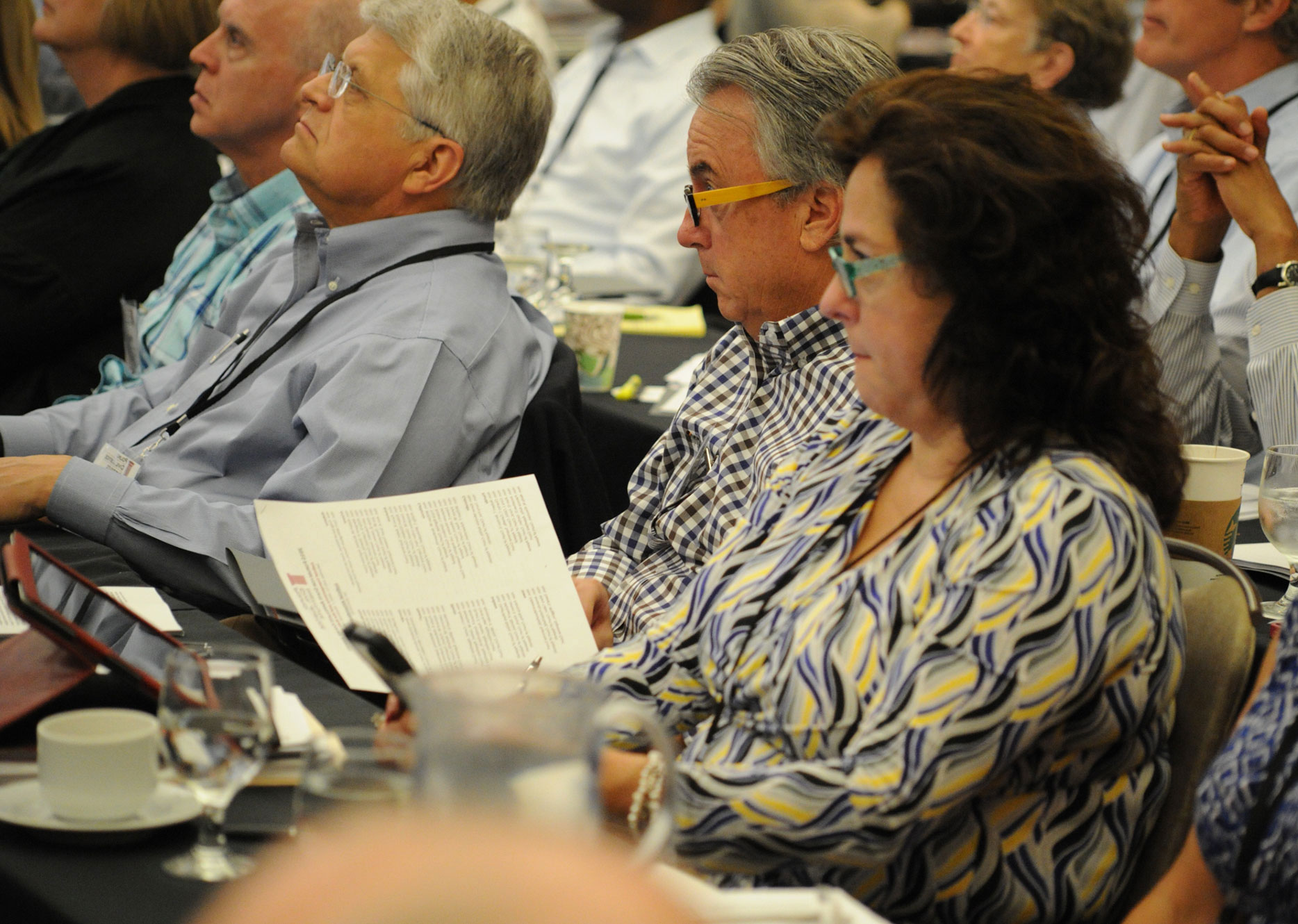
Judges Forum
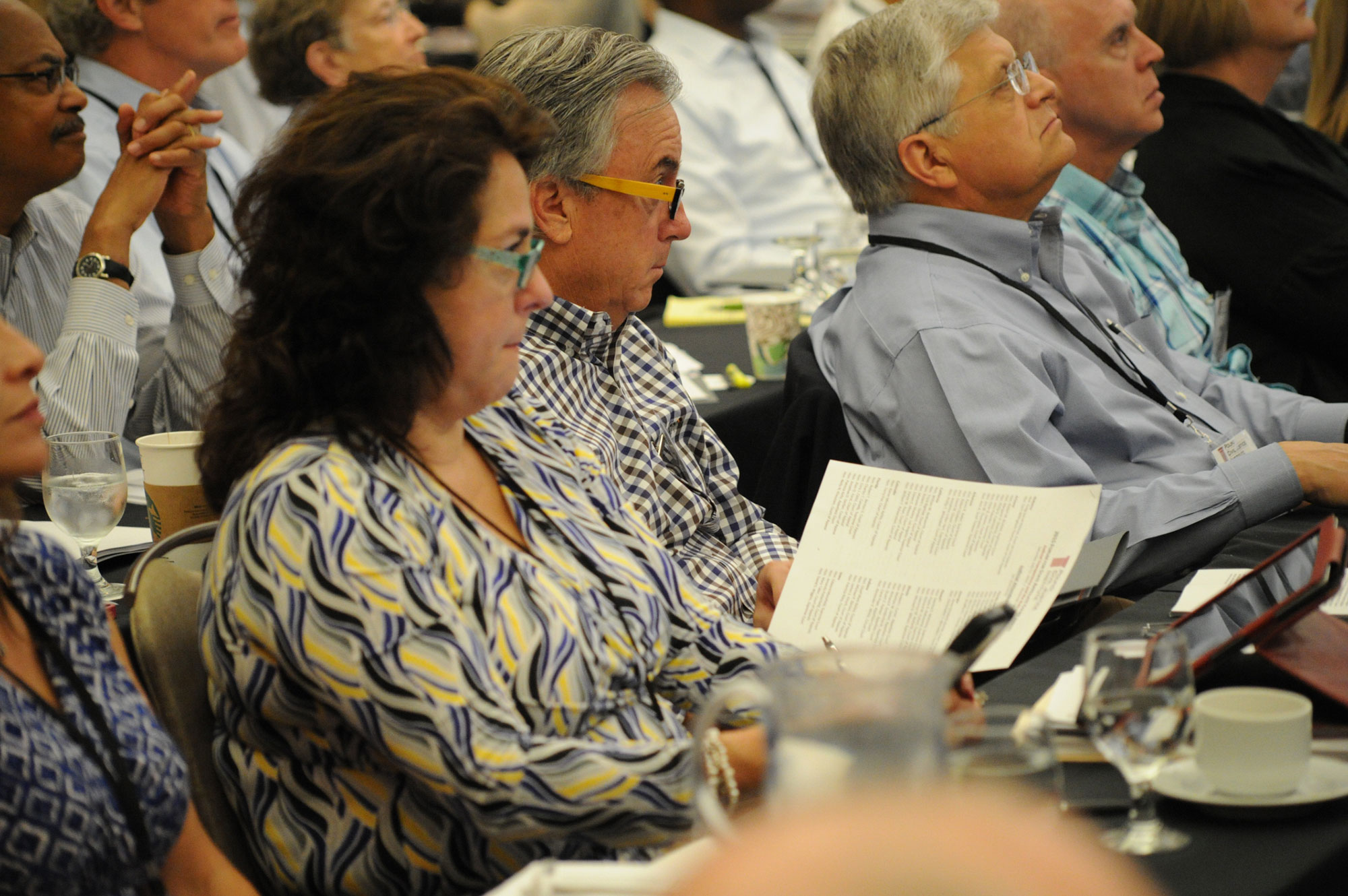
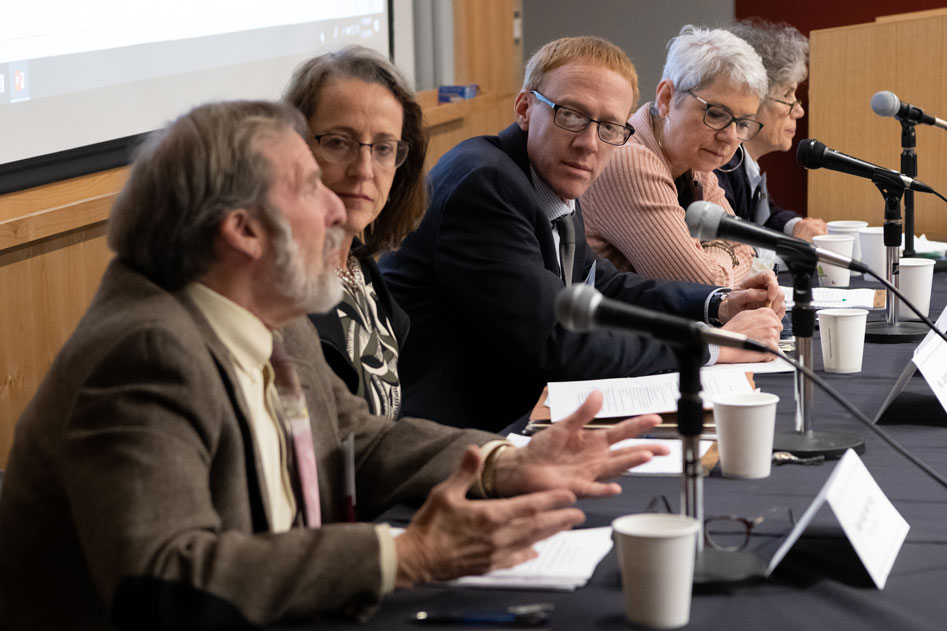
NCJI’s annual Forum for State Appellate Court Judges is the plaintiffs’ bar’s most significant outreach to America’s judges. The one-day Forum showcases our unique ability to bring together judges, legal scholars, and practicing attorneys, and provide an opportunity to engage in an open dialogue about major issues affecting civil justice in America.
Academic Symposium
Periodically, NCJI partners with the nation’s top law schools to sponsor new research to support the civil justice system. The resulting academic papers, published in the cosponsoring school’s Law Review, are distributed broadly and cited in research, briefs, and court decisions.